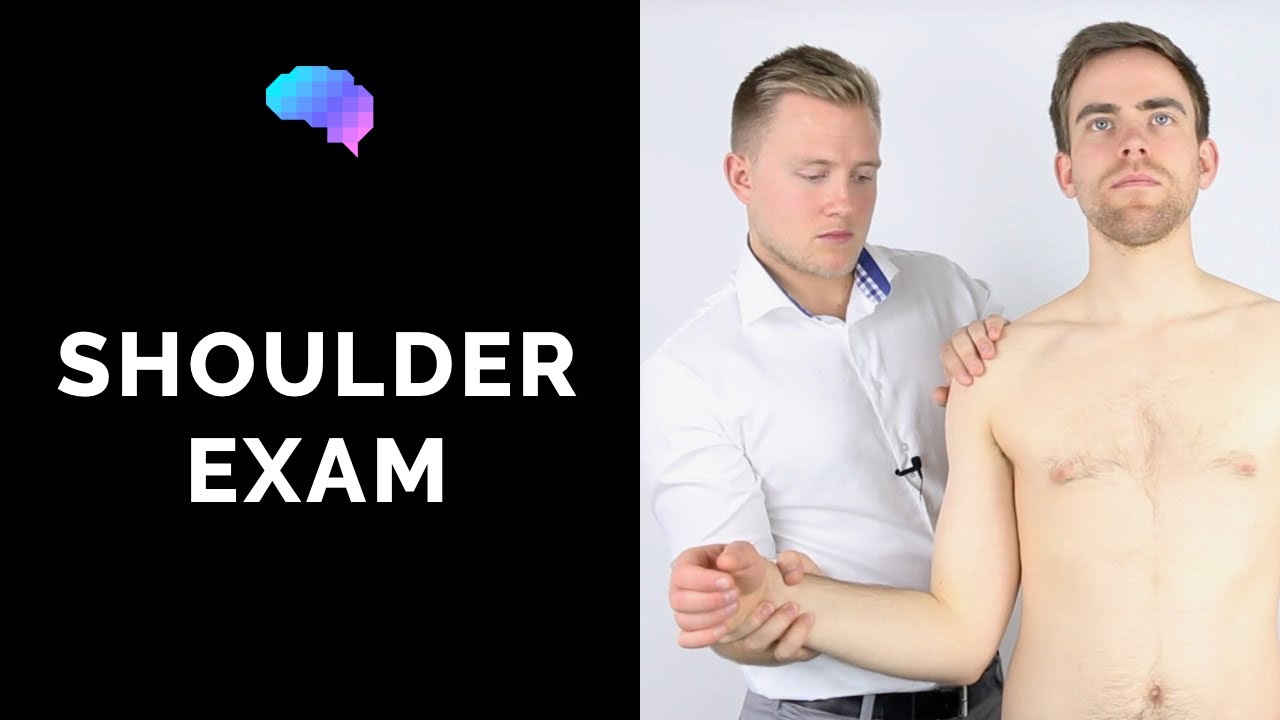
Mastering Shoulder Exams: A Comprehensive Guide for Medics
In the dynamic world of clinical practice, mastering the art of a thorough shoulder examination is paramount for accurate diagnosis and effective patient care. For students navigating OSCEs or seasoned professionals refining their skills, a systematic approach is key. This article, inspired by the clear, step-by-step methodology often championed by sources like Shoulder Exam Geeky Medics, delves into the essential components: Look, Feel, Move, and Special Tests, providing insights and practical tips to elevate your diagnostic prowess. For a deeper dive into OSCE preparation, consider exploring resources like Shoulder Examination OSCE: A Step-by-Step Guide for Medics.
Laying the Foundation: Initial Steps & Patient Comfort
Before even laying eyes on the shoulder, establishing a professional and empathetic environment is crucial. This foundational stage not only ensures patient safety and comfort but also sets the tone for a successful examination. Following best practices is not just about technique, but about holistic patient care.
- Hand Hygiene & PPE: Always begin by washing your hands thoroughly and don appropriate Personal Protective Equipment (PPE) if indicated by the clinical setting. This safeguards both you and your patient.
- Introduction & Consent: Introduce yourself clearly, stating your name and role. Confirm the patient's name and date of birth. Explain the examination in simple, patient-friendly language – "I'll be looking at, gently feeling, and asking you to move your shoulder to understand why you're experiencing discomfort." Crucially, obtain explicit verbal consent before proceeding.
- Adequate Exposure & Modesty: The shoulder is a complex joint; proper visualization requires adequate exposure of the upper body, from the neck to the mid-humerus. Always offer a blanket or gown to cover the patient when parts are not being examined, ensuring their modesty and comfort are maintained.
- Positioning & Pain Check: For the initial inspection, position the patient standing. Before any physical contact, ask if they are experiencing any pain. This baseline information is vital, as any subsequent maneuvers can be performed more cautiously if pain is present.
The "Look" Phase: A Keen Eye for Clues
The visual inspection is a critical first step, allowing you to gather significant diagnostic information without even touching the patient. It's about observing the obvious and subtle signs that hint at underlying pathology.
General Inspection from Afar
Begin with a brief general assessment of the patient as a whole, looking for overarching clinical signs that might impact or explain shoulder pathology.
- Body Habitus: Note if the patient is obese. Increased mechanical load on joints due to higher BMI is a significant risk factor for conditions like osteoarthritis, which can manifest in the shoulder.
- Scars: Observe any scars on the upper limbs or torso. These could be clues to previous surgeries (e.g., rotator cuff repair, fracture fixation) or past trauma. Note their location, size, and appearance (e.g., well-healed, keloid, fresh).
- Wasting of Muscles: Look for any noticeable muscle atrophy, particularly around the shoulder girdle. Unilateral wasting might suggest disuse atrophy secondary to chronic pain or joint pathology, or potentially a lower motor neuron lesion affecting the innervation of specific shoulder muscles.
- Aids and Adaptations: Scan the area around the patient. Do they use a support sling, crutches, or a walking stick? A sling for the affected shoulder immediately signals acute injury or post-operative status. Prescriptions charts can also offer insights into recent analgesia or other medications.
Closer Inspection of the Shoulder
Ask the patient to stand and turn slowly (e.g., 90° increments) to allow you to inspect their upper limbs from all angles, comparing the affected side to the unaffected side for asymmetry.
- Anterior Inspection:
- Scars & Bruising: Re-examine scars more closely, noting precise locations. Any bruising suggests recent trauma (e.g., contusion, fracture) or post-surgical changes.
- Asymmetry of the Shoulder Girdle: Look for differences in height, contour, or alignment between the two shoulders. This could be due to scoliosis, arthritis, fractures (e.g., clavicle), or dislocations (e.g., AC joint, glenohumeral).
- Swelling & Effusion: Note any unilateral swelling, which can indicate an effusion (fluid accumulation), inflammatory arthropathy, or even a dislocation distorting the normal contour.
- Abnormal Bony Prominence: A visible step-off or unusual bulge can signal a fracture (like a displaced clavicle fracture) or an anterior dislocation of the glenohumeral joint, where the humeral head sits anteriorly.
- Deltoid Wasting: Pay close attention to the bulk of the deltoid muscle. Asymmetrical wasting here can point to disuse atrophy from pain or immobility, or more specifically, an axillary nerve injury.
- Lateral Inspection:
- Scars: Look for scars on the side of the shoulder, again considering their implications for past events.
- Rounding of the Shoulder: Compare the natural curve. A 'flattened deltoid' or 'loss of the normal rounded contour' laterally is a classic sign of glenohumeral dislocation.
- Posterior Inspection:
- Scapular Winging: Ask the patient to push against a wall with outstretched arms. Observe if the medial border of the scapula protrudes, which can indicate serratus anterior weakness (long thoracic nerve injury) or trapezius weakness (spinal accessory nerve injury).
- Muscle Asymmetry: Re-evaluate the bulk of the trapezius, supraspinatus, and infraspinatus muscles. Atrophy in the supraspinous or infraspinous fossa can be highly suggestive of a chronic rotator cuff tear.
- Spinal Alignment: A subtle scoliosis can sometimes contribute to shoulder girdle asymmetry and pain.
The "Feel" Phase: Palpation for Tenderness and Texture
Once you've visually assessed the shoulder, the next step is to gently palpate key anatomical landmarks. This "Feel" phase allows you to pinpoint areas of tenderness, warmth, swelling, or abnormal texture, which can further narrow down your differential diagnosis.
Always palpate systematically and compare bilaterally, noting any asymmetry. Watch the patient's face for signs of discomfort.
- Sternoclavicular (SC) Joint: Palpate where the clavicle meets the sternum. Tenderness or swelling here can indicate arthritis, trauma, or infection.
- Acromioclavicular (AC) Joint: Move laterally along the clavicle to its distal end, where it articulates with the acromion. Tenderness, a 'step-off' deformity, or swelling suggests AC joint pathology, common after falls onto the shoulder.
- Clavicle: Systematically palpate along the entire length of the clavicle, feeling for tenderness, crepitus, or deformity indicative of a fracture.
- Greater Tuberosity of the Humerus: With the patient's arm by their side, locate the bony prominence on the lateral aspect of the humerus. This is the insertion point for the supraspinatus, infraspinatus, and teres minor tendons. Tenderness here can suggest rotator cuff pathology (tendinopathy or tear).
- Bicipital Groove: With the patient's arm slightly externally rotated, palpate the groove between the greater and lesser tuberosities. Tenderness in this area is a classic sign of biceps tendinopathy.
- Subacromial Bursa: This bursa lies beneath the acromion and deltoid. While often not directly palpable unless significantly inflamed, tenderness just inferior to the acromion can suggest subacromial bursitis.
- Deltoid Muscle: Feel the bulk and tone of the deltoid, noting any pain or spasm.
- Scapular Borders and Spine: Palpate the medial and lateral borders, and the spine of the scapula, noting any tenderness or muscle spasm in the rotator cuff muscles (supraspinatus, infraspinatus) originating from the scapula.
- Trapezius Muscle: Palpate the trapezius, particularly its upper fibres, as tenderness or tightness here is common in neck and shoulder pain syndromes.
The "Move" Phase: Assessing Range of Motion and Strength
The "Move" phase evaluates the shoulder's active and passive range of motion (ROM) and muscle strength. This helps identify limitations, pain arcs, and specific muscle weaknesses, crucial for localizing the problem. For more detailed insights into identifying pain and dysfunction causes, you might find Comprehensive Shoulder Exam: Identify Pain & Dysfunction Causes a valuable resource.
Active Range of Motion (AROM)
Ask the patient to perform specific movements themselves. This assesses their willingness to move, coordination, and any pain during movement. Always compare bilaterally.
- Flexion: "Raise your arm straight out in front of you and up towards the ceiling." (Normal: 160-180°)
- Extension: "Move your arm straight back behind you as far as you can." (Normal: 50-60°)
- Abduction: "Raise your arm out to the side and up towards the ceiling, as if reaching over your head." (Normal: 170-180°)
- Adduction: "Bring your arm across your body towards the opposite shoulder." (Normal: 45°)
- External Rotation: "Keep your elbow by your side, bend it to 90 degrees, and swing your hand outwards." (Normal: 80-90°)
- Internal Rotation: "Keep your elbow by your side, bend it to 90 degrees, and swing your hand inwards across your stomach." (Alternatively, "Reach your hand up your back as far as you can, trying to touch your opposite shoulder blade.") (Normal: 60-90°)
Note any pain throughout the arc of motion (e.g., painful arc for impingement typically between 60-120° abduction), crepitus, or compensatory movements.
Passive Range of Motion (PROM)
If AROM is limited, gently move the patient's arm through the same ranges. This helps differentiate between true joint stiffness (PROM limited) and muscle weakness or pain (AROM limited, PROM full). Assess the "end feel" – is it firm, soft, or empty (due to pain)?
Resisted Isometic Movements (Muscle Strength Testing)
Test the strength of key muscle groups, evaluating for pain and weakness (scored on a 0-5 scale).
- Flexion: Resist patient attempting to flex their arm. (Deltoid, coracobrachialis, biceps brachii)
- Extension: Resist patient attempting to extend their arm. (Latissimus dorsi, teres major, posterior deltoid)
- Abduction: Resist patient attempting to abduct their arm. (Deltoid, supraspinatus) - *Especially test in empty can position for supraspinatus*.
- External Rotation: Resist patient attempting to externally rotate. (Infraspinatus, teres minor)
- Internal Rotation: Resist patient attempting to internally rotate. (Subscapularis, latissimus dorsi, teres major, pectoralis major)
The "Special Tests" Phase: Refining the Diagnosis
Special tests are designed to provoke specific pain or instability, helping to confirm or rule out particular pathologies after the initial "Look, Feel, Move" assessment. It's crucial to select tests relevant to your differential diagnosis rather than performing every single test. These tests often target the rotator cuff, biceps tendon, AC joint, or glenohumeral joint stability.
- Rotator Cuff Impingement Tests:
- Neer's Impingement Test: Passively fully flex the patient's arm while stabilizing the scapula. Pain suggests impingement.
- Hawkins-Kennedy Impingement Test: Flex the patient's arm to 90 degrees, then forcibly internally rotate it. Pain suggests impingement.
- Rotator Cuff Tear Tests:
- Empty Can Test (Jobe's Test): Patient abducts arms to 90 degrees, 30 degrees forward flexion, with thumbs pointing down. Resist downward pressure. Weakness or pain indicates supraspinatus pathology.
- External Rotation Lag Sign: Examiner externally rotates the arm and asks the patient to hold it. Inability to hold suggests infraspinatus/teres minor tear.
- Lift-Off Test: Patient places hand behind their back (internal rotation) and tries to lift it off. Inability suggests subscapularis tear.
- Biceps Tendon Pathology Tests:
- Speed's Test: Patient flexes shoulder against resistance with elbow extended and forearm supinated. Pain in the bicipital groove indicates biceps tendinopathy or SLAP lesion.
- Yergason's Test: Patient flexes elbow to 90 degrees and supinates forearm against resistance. Pain in the bicipital groove indicates biceps tendinopathy or instability.
- AC Joint Pathology Tests:
- Cross-Body Adduction Test (Scarf Test): Patient actively adducts their arm across the chest. Pain at the AC joint suggests AC joint pathology.
- Glenohumeral Instability Tests:
- Apprehension Test: Patient's arm is abducted to 90 degrees and externally rotated. A feeling of impending dislocation indicates anterior instability.
- Relocation Test: If apprehension is positive, apply posterior pressure to the humeral head. Reduction of apprehension suggests anterior instability.
Conclusion
A comprehensive shoulder examination, adhering to the "Look, Feel, Move, and Special Tests" framework, is an indispensable skill for any medical professional. By systematically observing, palpating, assessing range of motion, and utilizing targeted special tests, you can effectively pinpoint the source of shoulder pain and dysfunction. Remember, a confident and competent examination begins with clear communication, respect for patient comfort, and a methodical approach. Continuous practice and refinement of these skills, much like the detailed guides provided by Geeky Medics, will empower you to provide excellent patient care and confidently navigate complex clinical scenarios.